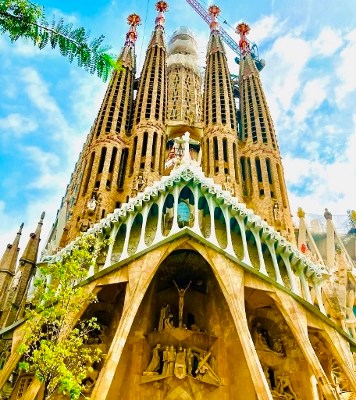
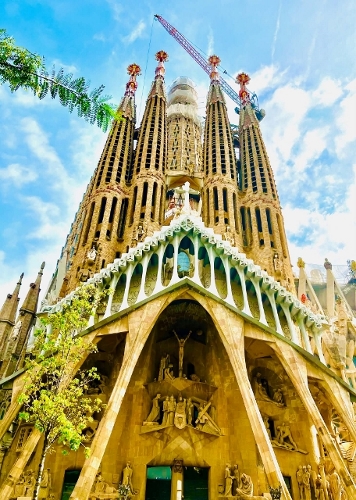
Tomorrow, June 10, 2026, Centenary of Antoni Gaudí’s death, the Sagrada Família will experience one of the most significant moments in its recent history: the blessing and inauguration of the tower of Jesus Christ, the central and symbolic element of the Basilica of Barcelona. The ceremony will be presided over by Pope Leo XIV and will represent the culmination of the Gaudí Year. The completion of the tower marks a fundamental milestone in the long construction process of the Sagrada Família. Work, which began in 2018, reached a decisive stage with the installation of the final element of the Cross, which took place in February 2026. The tower, with its strong spiritual and symbolic value, confirms the extraordinary relevance of Gaudí’s work, capable of uniting architecture, nature, light, matter, and ascending tension.
The Catalan master had left precise instructions: at the top, immediately beneath the cross, at a height of 172 meters, a statue of the Lamb of God will be placed. The sculpture, he added, must be created by an artist of the future. That artist is Andrea Mastrovito, 48, from Bergamo. His work was chosen by the foundation of the basilica in Barcelona from a shortlist of international projects. Now, the Basilica of the Sagrada Familia, with its new tower, is the tallest church in the world. A hundred years after his death, Antoni Gaudí continues to speak to the present, recalling the value of an architecture deeply rooted in culture, spirituality, and the observation of nature. #SagradaFamilia #barcelona #gaudi #centenarioGaudì
*
As you emerge from the subway tunnels on Line 5, it appears before you, towering over you with its extraordinary grandeur. The Basilica de la Sagrada Família, a splendid work of the visionary genius Antoni Gaudí, appears again and again, enchanting as if for the first time. These past months, work in progress has been at a feverish pace, ahead of the celebrations for the 100th anniversary of the death of the great Catalan architect.
Many high-impact initiatives are planned, previewed in Barcelona at a press conference (I wrote about them in a previous post). How do you get beneath the towers, spires, and pinnacles? How can you not be enchanted and stunned by a “mass of stone”—Gaudí worked on porphyry, granite, basalt, and Montjuïc sandstone—sculpted into bold forms that seem to defy the laws of physics, imposing themselves with symbolic and aesthetic depth?
Construction of the temple began in 1882 by architects Martorell and De Villar. Just a year later, Gaudí took over the direction and implementation of the project, which was modified and developed according to a “revolutionary” creative flair. His sudden death, in incredible circumstances—he was hit by a tram on June 7, 1926, and died three days later—prevented Gaudí from completing his work and completing the project, already outlined in detail.
Nearly a hundred years after its creator’s death, the Sagrada Familia and its colossal Christmas allegory continue to fascinate people. A UNESCO World Heritage Site, Gaudí’s basilica embodies intuitions of extraordinary artistic significance. In architecture, it is an expression of renewal (it blends Neo-Gothic elements with Catalan Art Nouveau modernism) and a striking testament to brilliant technique and creativity. An incomplete masterpiece that leaves room for personal imagination. However (and from whatever angle) you look at it, the “Sagrada” siempre encanta (always enchants).
#barcelona #sagradafamilia #gaudí #catalunya #centenariogaudi #gaudi2026
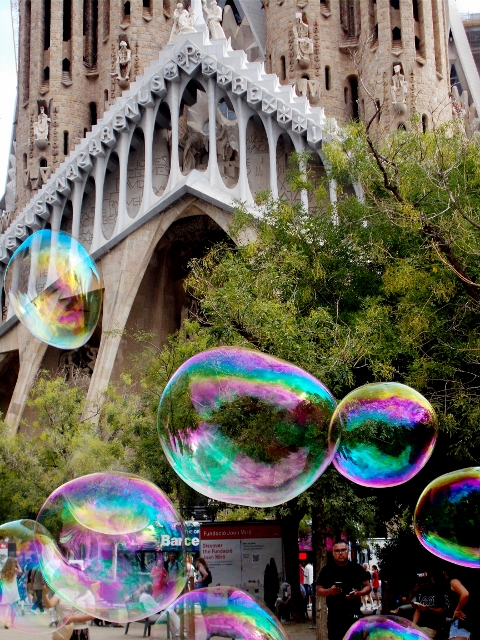
Photos and short video by © Roberto Alborghetti
Domani 10 giugno 2026, nel giorno del centenario della morte di Antoni Gaudí, la Sagrada Família vivrà uno dei momenti più significativi della sua storia recente: la benedizione e inaugurazione della torre di Gesù Cristo, elemento centrale e simbolico della Basilica di Barcellona.
La cerimonia sarà presieduta da Papa Leone XIV e rappresenterà il momento culminante dell’Anno Gaudì.
Il completamento della torre segna una tappa fondamentale nel lungo processo costruttivo della Sagrada Família. I lavori, avviati nel 2018, sono giunti a una fase decisiva con l’installazione dell’ultimo elemento della Croce, avvenuta nel febbraio 2026. La torre, con il suo forte valore spirituale e simbolico, conferma la straordinaria attualità dell’opera di Gaudí, capace di unire architettura, natura, luce, materia e tensione ascensionale. Il maestro catalano aveva lasciato indicazioni precise: in cima, subito sotto la croce, verrà posta, a 172 metri di altezza, una statua dell’Agnello di Dio. La scultura – aveva aggiunto – dovrà essere realizzata da un artista del futuro. Ecco, quell’artista è Andrea Mastrovito, 48 anni, bergamasco. La sua opera è stata scelta dalla fondazione della basilica di Barcellona tra una rosa di progetti internazionali. Ora, la Basílica de la Sagrada Família, con la sua nuova torre, è la chiesa più alta del mondo. A cento anni dalla sua scomparsa, Antoni Gaudí continua così a parlare al presente, ricordando il valore di un’architettura profondamente radicata nella cultura, nella spiritualità e nell’osservazione della natura. #SagradaFamilia #barcellona #gaudi #centenarioGaudì
*
Come si esce dai tunnel della metropolitana della Linea 5, ti appare di fronte, sovrastandoti con la sua straordinaria grandezza. La Basílica de la Sagrada Família , splendida opera del genio visionario di Antoni Gaudì, la rivedi e incanta sempre, come se fosse la prima volta. In questi mesi i “lavori in corso” sono febbrili, in vista delle celebrazioni per i 100 anni della morte del grande architetto catalano. Tante e di grande impatto le iniziative in programma presentate in anteprima a Barcellona in una conferenza stampa (ne ho scritto nel precedente post). Come si arriva sotto torri, guglie e pinnacoli, come si fa a non restare ammaliati e storditi da una “massa di pietre” – Gaudì lavorò su porfido, granito, basalto e arenaria del Montjuic – modellata in forme ardite che sembrano sfidare le leggi fisiche, imponendosi per profondità simbolica ed estetica?
I lavori della costruzione del tempio iniziarono nel 1882 dagli architetti Martorell e De Villar. Soltanto Un anno dopo Gaudí assunse la direzione e la realizzazione del progetto, che venne modificato e sviluppato secondo un estro creativo “rivoluzionario”. La morte improvvisa, in circostanze incredibili – venne travolto da un tram il 7 giugno 1926 e morì tre giorni dopo – impedí a Gaudí, di finire la sua opera e di portare a compimento il progetto, già delineato nei dettagli. A quasi cent’anni dalla scomparsa del suo autore, la Sagrada Familia, e la sua colossale allegoria del Natale, continuano ad affascinare le genti. Patrimonio mondiale Unesco, la basilica di Gaudì narra intuizioni di straordinaria portata artistica. In architettura, è espressione di rinnovamento (mescola elementi neo gotici al modernismo catalano dell’Art Nouveau) ed è sorprendente testimonianza di tecnica e creatività geniali. Un capolavoro incompleto che lascia spazio, appunto, all’immaginario personale. Comunque (e da qualsiasi angolo) la si guardi, la “Sagrada” siempre encanta.


Interessantissimo. Che meraviglia!
Davvero un’opera che continua a sorprendere ed affascinare! Grazie! Una buona giornata!
Grazie a te e felice mercoledì!