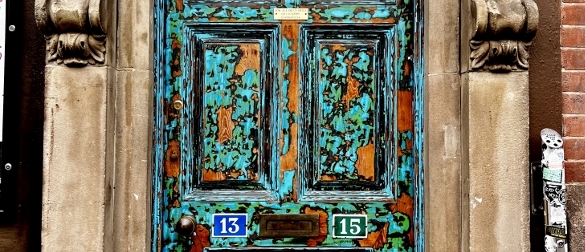


© Roberto Alborghetti – The scraped door and four close-up photos, Nottingham (UK).
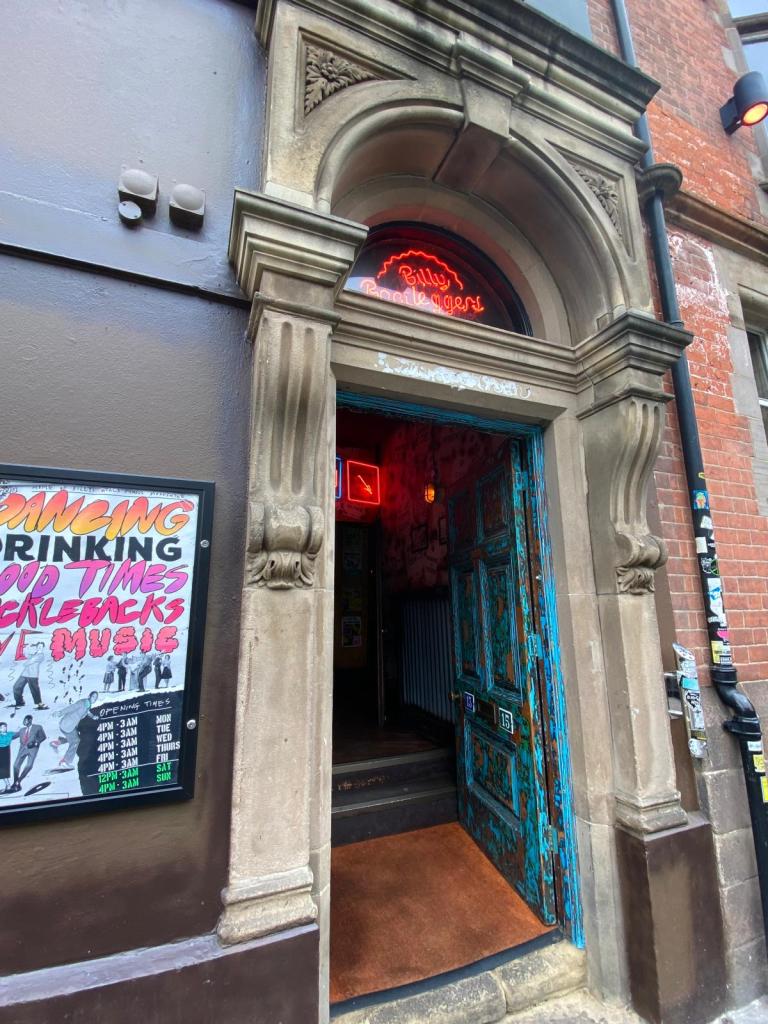


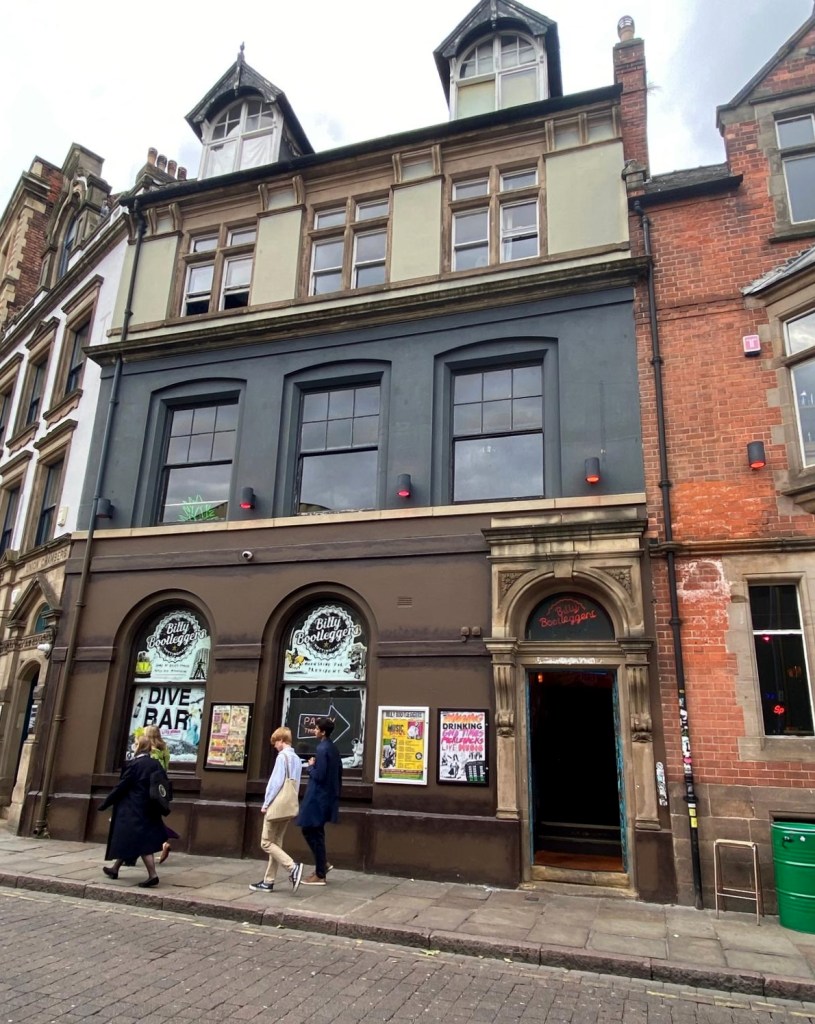
Photos by Marysia Zipser
On my most recent trip to Nottingham to participate in the 10 year anniversary events of The Ghost Bus Project, I had the opportunity to visit the Contemporary Museum, accompanied by Marysia Zipser (founder of ACT Art Culture Tourism) and the Director of Finance and Operations of Contemporary Nottingham, Solman Nouman. Along the road that leads to the main entrance of the Museum I came across a deteriorated door of a pub, Billy Bootleggers, which caught my gaze and my attention, as happens in my research project “Lacer/actions”, dedicated precisely to collection and photographic documentation of everything that is deteriorated and corroded by time and the living environment (from decomposed advertising posters to cracks and scratches on metropolitan and industrial walls and furnishings). So far I have already collected over 180,000 images from around the world.
Obviously I took several photos of that front door, which however had raised some questions about the origin and cause of that deterioration. Unfortunately that day I didn’t have time to investigate – go into the place and ask the owners – why the bar was closed. But from an examination of the surface of the door wood I immediately understood that the effect of scratches and corrosion did not seem natural and casual to me. After all, by now, I have a trained eye for this kind of images 😂. So I kindly asked Marysia Zipser to investigate the place later in order to have confirmation for my doubts and what I thought.
The issue immediately involved Marysia, also because the pub (and the door) are located on one of the most beautiful and historic streets in Nottingham, at numbers 13-15 High Pavement, not far from St Mary’s Church and other important places. Marysia checked with the City of Nottingham Authorities. She also exchanged emails with Nick Molyneux (Nottingham CAMRA) and Scott C. Lomax, City Archaeologist (Nottingham City Council / Nottingham City Museums and Galleries). The opinion of Scott C. Lomax was very interesting. According to him “it really seems that the door was deliberately scraped. Google Streetview shows that in September 2018 it was green, then in April 2019 it was painted blue. In September 2020 it had the current aspect. I guess for this to happen in a period of just 17 months, it has to be intentional.”
Then, after a few days, here is the solution to the “case of the deteriorated green-blue door”. Marysia Zipser – in an email sent to the people involved in this singular research – wrote: “Good morning everyone! Good news! I have solved the case of the door! Carla Chiericallo and I visited High Pavement on Friday evening and entered at 1-3pm High Pavement and were pleased to see the interior of the American-influenced Billy Bootleggers bar with performance space. The lady behind the counter said the “deterioration” of the door is intentional and has been nicely painted like that on purpose. We asked a lot of questions and were very impressed with their interiors and what they offer. I took photos of the door, the interior and then other doors along the way. So, Roberto you’ll be very happy because it’s great story out! The pub is run by Elliot Towser, an entrepreneur (born in Nottingham, where he studied) who also runs a similar bar in Newcastle.”
So, case solved! I sent a big “thank you” to Marysia and all the experts and professionals who were involved in this unique research. I was very happy with the outcome of these “investigations”. The fact that the Nottingham door, at number 13-15 of High Pavement, has been intentionally scratched and corroded, confirms the idea and basic concept of my photographic project “Lacer/actions” which seeks the unexplored dimension of imperfection, also on an aesthetic level. Nottingham’s deliberately peeling door reveals that decay and deterioration are themselves life and transformation. And that this can therefore generate a new style, a new artistic form. Yes, it is possible to “transform decay into art“, as the mayor of Broxetowe, Councilor Sue Paterson, said when taking part in the event for the 10th anniversary of The Ghost Bus, the rusty and old Barton bus which continues to fascinate for its deterioration.
This story is dedicated in memory of Nick Molyneux who passed away in October.
*
Nel mio più recente viaggio a Nottingham per partecipare agli eventi per i 10 anni del Progetto The Ghost Bus, ho avuto l’opportunità di visitare il Museo di Arte Contemporanea, accompagnato da Marysia Zipser (fondatrice di ACT Art Culture Tourism) e dal Direttore dello stesso Museo, Solman Nouman. Lungo la via che porta all’ingresso principale del Museo mi sono imbattuto in una porta deteriorata del bar Billie Bootleggers che ha attirato il mio sguardo e la mia attenzione, come del resto capita nella mia ricerca-progetto “Lacer/actions”, dedicata appunto alla raccolta e alla documentazione fotografiche di tutto ciò che è deteriorato e corroso dal tempo e dall’ambiente di vita (dai manifesti pubblicitari decomposti alle crepe e ai graffi su muri e arredi metropolitani e industriali). Finora sono già oltre 180.000 le immagini che ho raccolto in giro per il mondo.
Ovviamente ho scattato diverse foto a quella porta di ingresso, che comunque mi aveva fatto sorgere delle domande circa l’origine e la causa di quel deterioramento. Purtroppo quel giorno non ho avuto il tempo di indagare – entrare nel locale e chiedere ai proprietari – perché il pub era chiuso. Ma da un esame della superficie del legno della porta ho subito capito che quell’ effetto di graffi e corrosioni non mi sembrava naturale e casuale. Del resto, ormai, ho l’occhio allenato per questo genere di immagini 😂. Ho così chiesto gentilmente a Marysia Zipser di indagare sul posto successivamente in modo da avere una conferma per i miei dubbi e per ciò che pensavo.
La questione coinvolse subito Marysia, anche perchè il pub (e la porta) si trovano su una delle più belle e storiche vie di Nottingham, al numero 13-15 di High Pavement, poco distante dalla St Mary’s Church. Marysia verificò presso gli Enti della City of Nottingham. Ebbe uno scambio di email anche con Nick Molyneux (Nottingham CAMRA) e con Scott C. Lomax, City Archeologist (Nottingham City Council / Nottingham City Museums and Galleries). Molto interessante il parere di Scott C. Lomax, per il quale “sembra davvero che la porta sia stata raschiata deliberatamente. Google Streetview mostra che a settembre 2018 era verde, poi ad aprile 2019 è stata dipinta di blu. A settembre 2020 aveva l’aspetto attuale. Immagino che, perché ciò accada in un periodo di soli 17 mesi, debba essere intenzionale”.
Poi, dopo qualche giorno, ecco la soluzione del “giallo della porta verde-azzurra deteriorata”. Marysia Zipser – in una email inviata alle persone coinvolte in questa singolare ricerca – così scriveva: “Buongiorno a tutti! Buone notizie! Ho risolto il mistero della porta! Carla Chiericallo ed io abbiamo visitato High Pavement venerdì sera e siamo entrati al 13-15 High Pavement e siamo state liete di vedere gli interni del bar Billy Bootleggers, di influenza americana, con spazi per spettacoli. La signora dietro il bancone ha detto che il “deterioramento” della porta è intenzionale ed è stato ben verniciato così di proposito. Abbiamo posto molte domande e siamo rimaste molto colpite dai loro interni e da ciò che offrono. Ho scattato foto della porta, dell’interno e poi di altre porte lungo la strada. Quindi, Roberto sarai molto contento perché è uscita una bella storia! Il pub è gestito da Elliot Towser, un imprenditore che (nato a Nottingham, dove ha frequentato gli studi) gestisce anche un bar simile a Newcastle”.
Dunque, mistero risolto! Ho inviato un grande “grazie” a Marysia e a tutti gli esperti e professionisti che sono stati coinvolti in questa singolare ricerca. Sono stato molto contento dell’esito di queste “indagini”. Il fatto che la porta di Nottingham, al numero 13-15 di High Pavement, sia stata intenzionalmente graffiata e corrosa, conferma l’idea e il concetto basilare del mio progetto fotografico “Lacer/actions” che ricerca la dimensione inesplorata dell’imperfezione, anche a livello estetico. La porta volutamente scrostata di Nottingham rivela che la decomposizione e il deterioramento sono essi stessi vita e trasformazione. E che ciò dunque può generare un nuovo stile, una nuova forma artistica. Sì, è possibile “trasformare il degrado in arte”, come ha detto il sindaco di Broxetowe, Councilor Sue Paterson, nel partecipare all’evento per il 10 anni di The Ghost Bus, l’arrugginito e vecchio bus dei Barton che continua affascinare proprio per il suo deterioramento.
 ROBERTO ALBORGHETTI