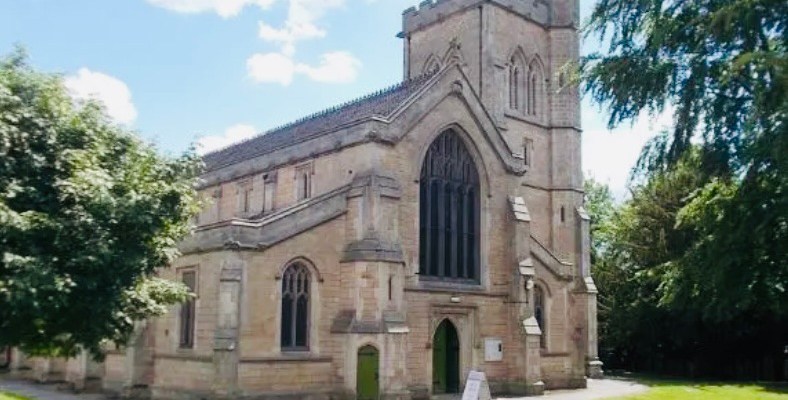
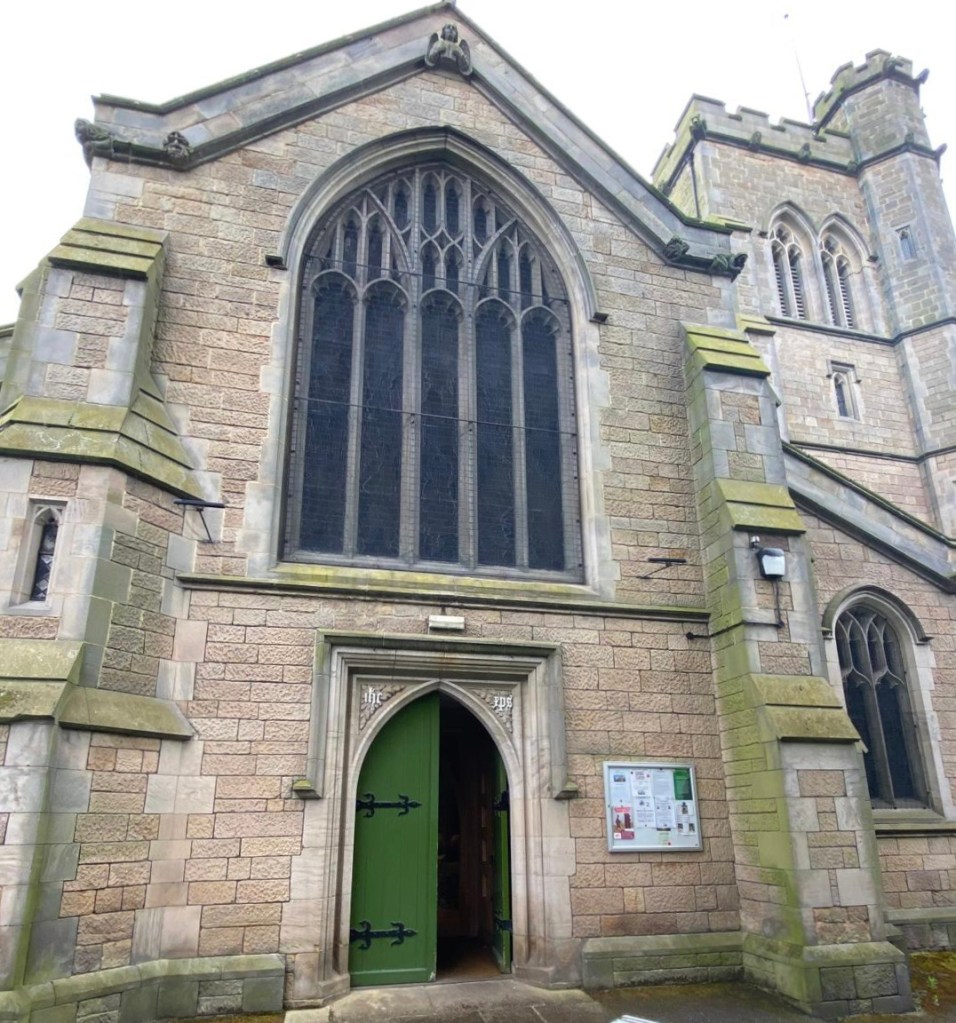


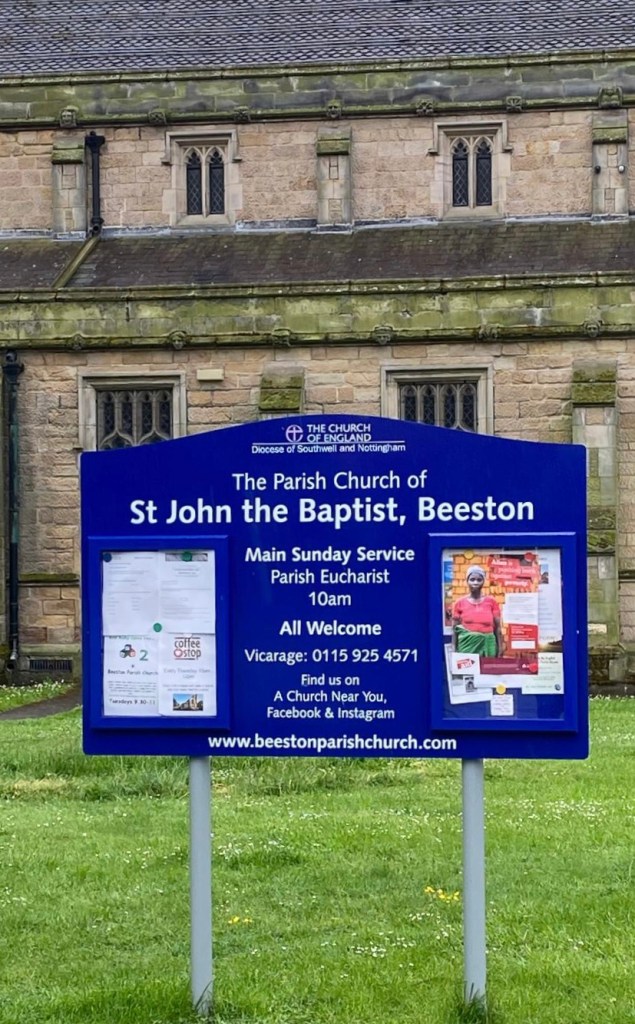


St John the Baptist Church in Beeston, Nottingham, hosts the special event “The Ghost Bus Night Show” on 12TH June, from 7pm. This is an opportunity to take a walk between the art and history of an evocative place.
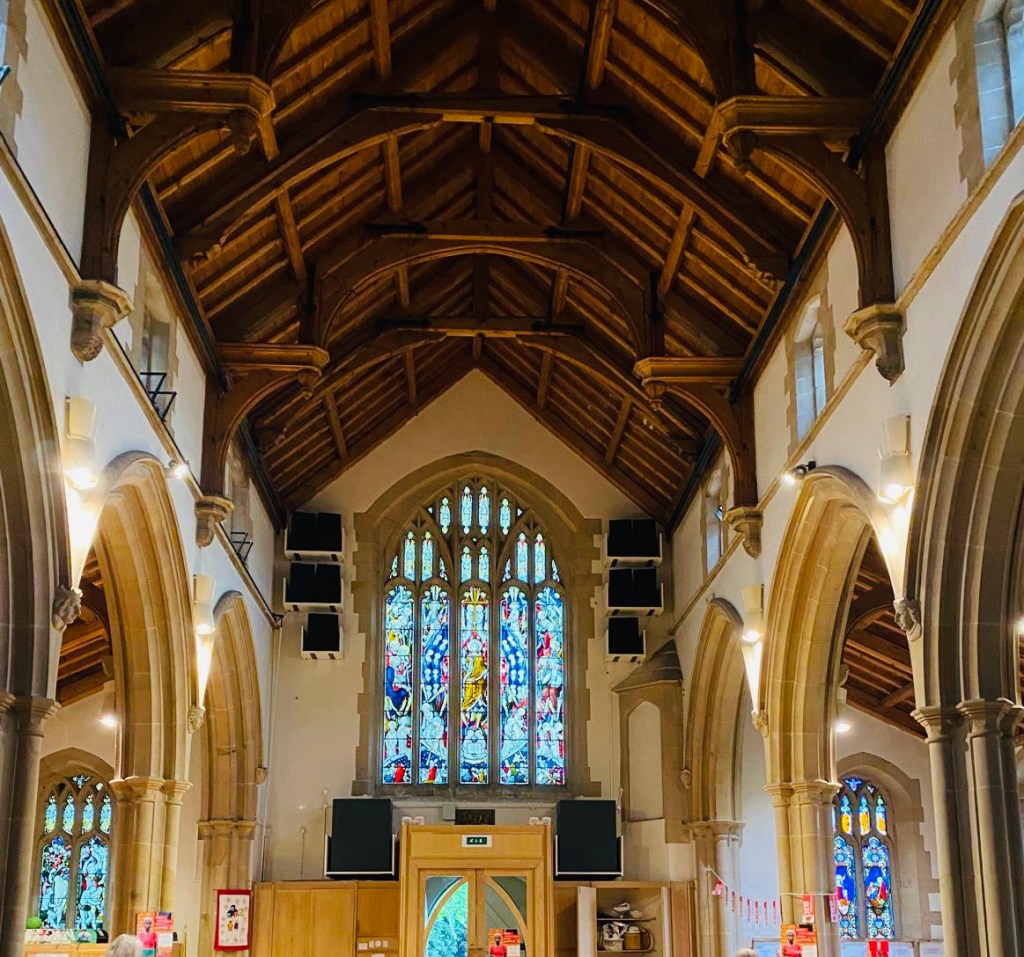
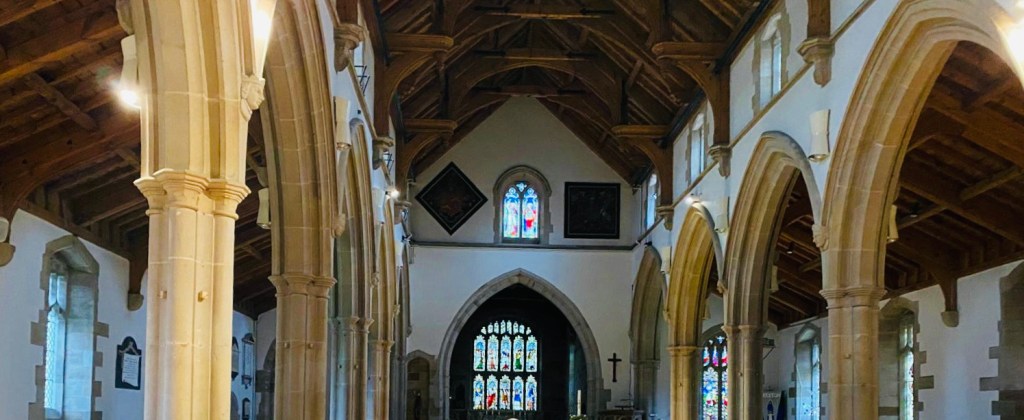
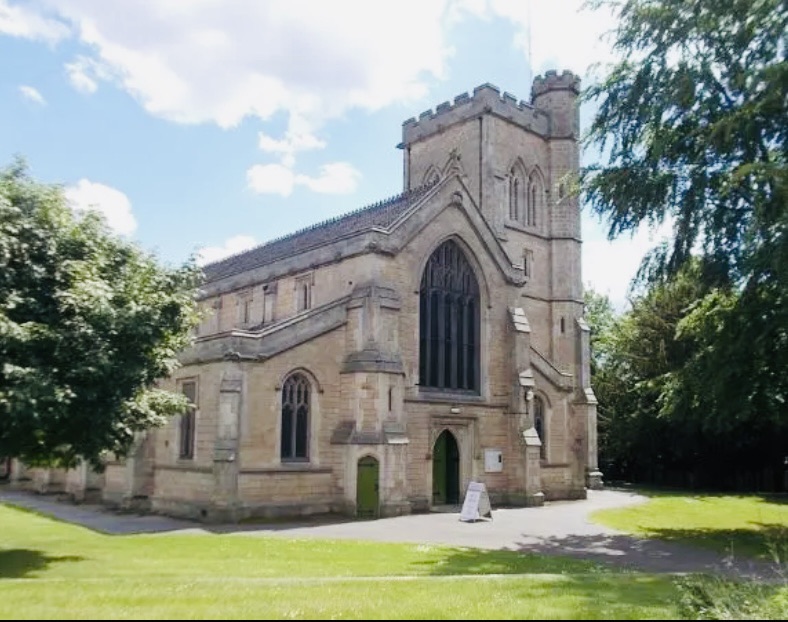
The present building is at least the fourth church on this site, previous ones having been built in the 13th, 14th and 15th centuries. Until the Dissolution of the Monasteries by Henry VIll the church was served by priests appointed by Lenton Priory. The church has three main areas: the Chancel at the east end, the Nave and the Tower, which is above the former south porch, now the toilet area.
The Nave, Tower, South Porch and former Vicar’s Vestry (now the chair store) date from 1843-44 and were designed by George Gilbert Scott, a distinguished Victorian architect. The foundation stone can be seen in one of the toilets in the porch. The Tower is 74 feet in height and contains 10 bells, six dating from 1870, two from 1877 and two which were installed in 1998. All were cast at the Taylor Bell Foundry, Loughborough.
The Nave is built in the Late Perpendicular style of architecture. The 13th Century Font is lead lined and dates from the reign of Henry ill (1216 – 1272). It is the oldest relic we have in the church. The Poor Box, bearing the inscription ‘1684 WA, EB, CW’ (Churchwardens), is now fixed to the pillar on the left as you enter the church. Money collected in this box would have been distributed to the poor of the Parish and is used as a donations box to help maintain the church. The nave windows are of victorlan stained glass. The most valudole window is in the South Aisle and was designed by Charles E Kempe, the distinguished Victorian stained glass designer and manufacturer. His ‘trade mark’ is peacocks feathers for angels’ wings.
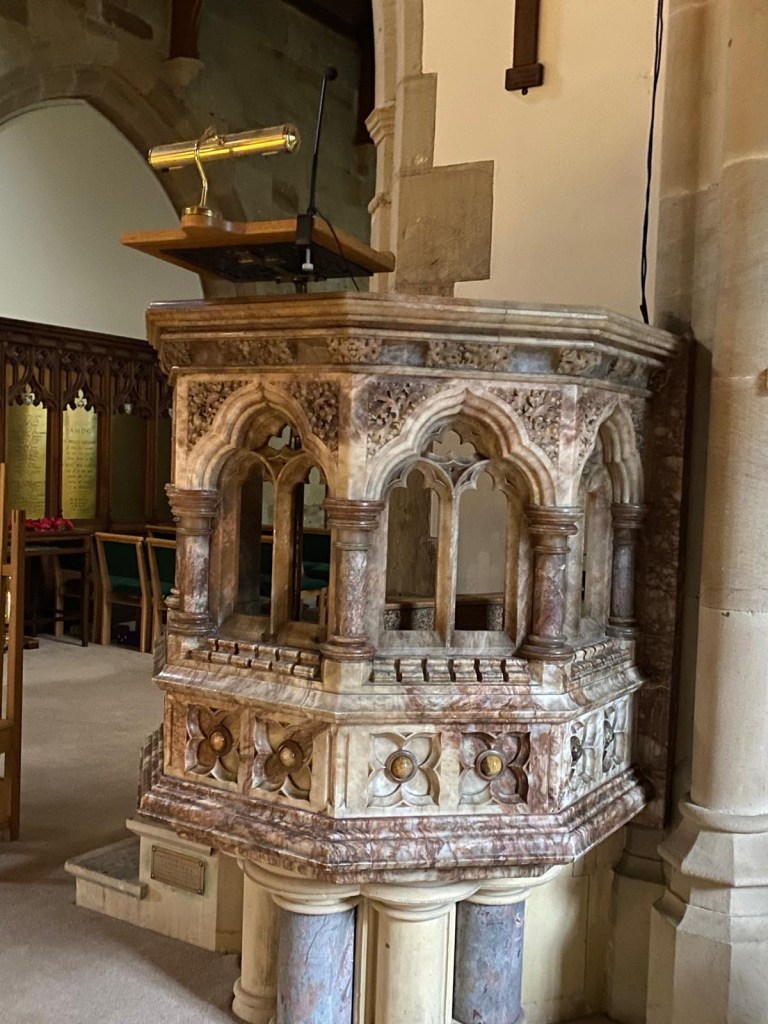
The West Window above the west door is entitled ‘The Doom’ and was installed in 1877 in memory of John Watson, the owner of Beeston’s Silk Mill. The Pulpit of Nottingham Alabaster is in memory of the Rev. T. J. Oldrini, vicar of the parish 1854-85. Above the Pulpit is a Royal Coat of Arms of George III. Royal Coats of Arms acknowledge the Church of England’s allegiance to the Monarch as Governor of the Church of England and Defender of the Faith. Queen Victoria’s Coat of Arms, in whose reign the Nave was rebuilt is above the west door.
On the north side of the chancel arch is a Hatchment in memory of John Rickards, who died in 1821, He lived at the Old Manor House, West End, Beeston. His Memorial Tablet is now on the north wall above the door leading to the chair store. Notice that the Coat of Arms on this Memorial is identical to the one on the Hatchment. The motto ‘ESTO QUOD ESSE VIDERIS’ means ‘BE WHAT YOU APPEAR TO BE’.
To the right of the pulpit you will see a statue of the Madonna and Child which was made by Peter Eugene Ball and purchased in September 2016 using bequests by Christine and Hetley Towlson, Alice Hingley and Audrie Miller, all members of the congregation. You can also see the Mothers’ Union banner and the Trailblazers banner. On this site stood the Chantry Chapel of St. Catherine. There is also a votive candle stand sited here where a candle may be lit, perhaps in memory of a loved one.
On the north side of the chancel arch is the statue of Saint John the Baptist our Patron Saint, which was also made by Peter Ball and purchased with bequests and donations in 2018.
The “Ghost Bus Night Show” event is curated and directed by Marysia Zipser – Art Culture Tourism, promoted by Visit Nottinghamshire and The Beestonian; Supported by Broxtowe Borough Council, Nottingham City Council, Nottinghamshire County Council, Confetti Media Group, Nottingham Trent University, University of Nottingham, Jeanie Barton Music.
Doors open at 6.15pm. The Church is located in the centre of Beeston, a short distance from The Square. For accessibility , transport and parking see this link: https://beestonparishchurch.com/ . Trams and bus stops are close by the perimeter of the church front lawn.
Ticketing. Get your tickets at: https://www.eventbrite.co.uk/e/the-ghost-bus-show-2024-a-visual-and-musical-arts-experience-tickets-906648158047 . Join us for an epic voyage in the Land of Robin Hood.
PHOTOS BY MARYSIA ZIPSER
*
La chiesa di San Giovanni Battista in Beeston, Nottingham, ospita il prossimo 12 giugno l’evento speciale “The Ghost Bus Night Show”, dalle ore 7pm. Questa è una opportunità per fare due passi tra l’arte e la storia di un luogo suggestivo.
L’edificio attuale è almeno la quarta chiesa costruita su questo sito, sostituendo e modificando edificazioni avvenute nei secoli XIII, XIV e XV. Fino alla soppressione dei monasteri da parte di Enrico VII, la chiesa era servita da sacerdoti nominati dal Priorato di Lenton. La chiesa ha tre ambienti principali: il presbiterio all’estremità est, la navata centrale e la torre. Risalgono al 1843-44 e furono progettati da George Gilbert Scott, illustre architetto vittoriano. La prima pietra può essere vista in uno dei servizi igienici nel portico. La torre è alta 74 piedi e contiene 10 campane, sei risalenti al 1870, due del 1877 e due installate nel 1998. Tutte furono fuse alla Taylor Bell Foundry, Loughborough.
La navata è costruita nello stile perpendicolare (tardo gotico). Il fonte battesimale del XIII secolo è rivestito di piombo e risale al regno di Enrico III (1216 – 1272). È il reperto più antico nella chiesa. La “cassetta dei poveri”, recante l’iscrizione ‘1684 WA, EB, CW’ (Churchwardens), è ora fissata al pilastro a sinistra entrando in chiesa. Il denaro raccolto in questa cassetta sarebbe stato distribuito ai poveri della Parrocchia e ora viene utilizzato per le donazioni per aiutare a mantenere la chiesa. Le finestre della navata sono in vetro colorato vittoriano. La finestra più preziosa si trova nella navata sud ed è stata progettata da Charles E Kempe, l’illustre designer e produttore di vetrate vittoriane. Il suo “marchio di fabbrica” sono le piume di pavone per le ali degli angeli.
Sul lato nord dell’arco del presbiterio c’è un portello in memoria di John Rickards, morto nel 1821, che visse all’Old Manor House, West End, Beeston. La sua lapide commemorativa si trova ora sulla parete nord, sopra la porta che conduce al negozio di sedie. Si noti che lo stemma su questo memoriale è identico a quello sulla botola. Il motto ‘ESTO QUOD ESSE VIDERIS’ significa ‘SII QUELLO CHE TU MOSTRI DI ESSERE’.
 ROBERTO ALBORGHETTI