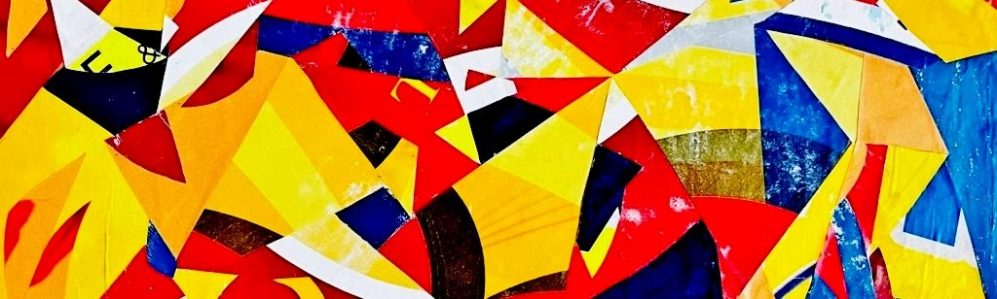

© Artwork by Roberto Alborghetti – Lacer/actions project
© Verses by Joshua Seller
***
Moonlit sky
quivering crepe myrtles
et their shadows
*
Cielo dal chiaro di luna
tremolanti mirti crespi
e le loro ombre
*
Ciel au clair de lune
des tremblants myrtes crépus
et leurs ombres
*
Ciel al claro de luna
tremolantes mirtos crespos
y sus sombras
***
“Moonlit Sky” too is part of my collaboration with musician, producer and poet Joshua Sellers, from West Memphis (Arkansas, USA). Fusing Joshua ‘s words with my images – realistic pics of torn and decomposed publicity posters, natural cracks, scratches and urban signs – , we created a series of haiga: a combinationof haikuand visual art.
Haiga is a style of Japanese painting based on the aesthetics of haikai, from which haiku poetry derives, which often accompanied such poems in a single piece. Like the poetic forms it accompanied, haiga was based on simple, yet often profound, observations of the everyday world. Stephen Addiss points out that “since they are both created with the same brush and ink, adding an image to a haiku poem was… a natural activity.”
Just as haiku often internally juxtapose two images, haiga may also contain a juxtaposition between the haiku itself and the art work. The art work does not necessarily directly represent the images presented in the haiku. Stylistically, haiga vary widely based on the preferences and training of the individual painter, but generally show influences of formal Kanō school painting, minimalist Zen painting, and Ōtsu-e, while sharing much of the aesthetic attitudes of the nanga tradition. Some were reproduced as woodblock prints. The subjects painted likewise vary widely, but are generally elements mentioned in the calligraphy, or poetic images which add meaning or depth to that expressed by the poem.
 ROBERTO ALBORGHETTI
What a wonderful morning delight of the night gone by…
Thank you so much for your kind comment!