
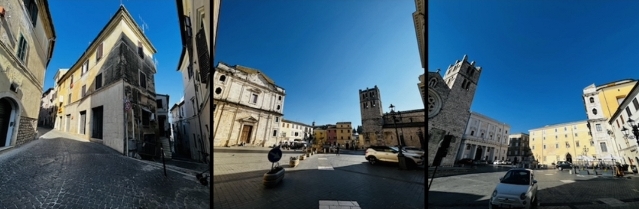
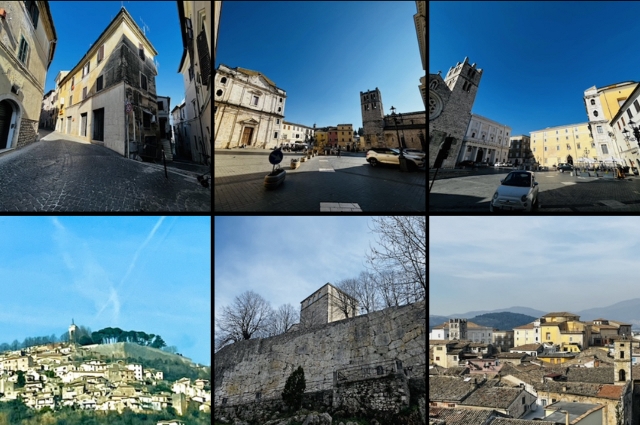
Alatri (Frosinone) is a special and particular city: it announces itself from afar, from the top of a hill in the Ciociaria area (Lazio, Italy). It is first of all famous for the presence of the pre-Roman Acropolis surrounded by cyclopean walls in which the ancient Porta Civita opens. The frame of the walls, well preserved, is almost concentric with respect to the ancient acropolis and is more than 2 kilometers long. Parts of the walls are grafted into the urban fabric of the city and constitute spectacular stone walls of homes and public places.
In the center and on the top of the Acropolis is the Cathedral of San Paolo, built on an ancient temple in the 10th century and then remodeled during the 19th century: it preserves original parts and the statue of San Sisto, of modern workmanship, but with a silver face dating back to 1584. Also a must-see is the church of San Silvestro, founded in the Middle Ages. It houses works of great artistic value and iconographic testimonies whose symbolism would seem to be connected to the Knights Templar. The “Triplice Cinta” carved in the architrave of the main portal, some crosses and characters can be recognized in various frescoes that still await investigation and study.
Worth a visit is the church of San Francesco. It is located in the Le Piagge district, a rural medieval village, between Piazza Santa Maria Maggiore and the Porta di San Francesco. It was built at the end of the 13th century and remodeled inside in Baroque style in the 18th century. Note the large portal and the finely decorated rose window, as well as some valuable works such as a Deposition from the 17th-century Neapolitan school.
In the main square of the historic center is the collegiate church of Santa Maria Maggiore, built in the 5th century, on the ruins of a temple dedicated to the goddess Venus, originally dedicated to the Virgin and the Savior. Mentioned for the first time in 1137, it was enlarged and transformed into the Romanesque-Gothic lines visible today.
Above the central portal, the magnificent rose window, faithfully reproduced in scale also in the nearby church of San Francesco, flanked by the Franciscan convent dating back to the 14th century. Here is a mysterious fresco that… But this is another story that deserves special attention. #alatri #frosinone #acropolialatri #muraciclopichealatri #ciociaria #cavalieritemplari
*
Alatri (Frosinone) è una città speciale e particolare: si preannuncia da lontano, dall’alto di un colle del territorio ciociaro. È innanzitutto famosa per la presenza dell’Acropoli preromana circondata da mura ciclopiche nelle quali si apre l’antica Porta Civita. La cornice delle mura, ben conservata, è quasi concentrica rispetto all’antica acropoli ed è lunga più di 2 chilometri. Parti delle mura si innestano nel tessuto urbanistico della città e costituiscono spettacolari pareti di pietra di abitazioni e locali pubblici. Al centro e sulla sommità dell’Acropoli si trova il Duomo di San Paolo, eretto su un antico tempio nel X secolo e rimaneggiato poi nel corso dell’Ottocento: conserva parti originali e la statua di San Sisto, di fattura moderna, ma con il volto in argento risalente al 1584.
Tappa obbligata anche nella chiesa di San Silvestro, fondata nel medioevo. Custodisce opere di grande valore artistico e testimonianze iconografiche la cui simbologia sembrerebbe collegarsi ai Cavalieri Templari. La “Triplice Cinta” scolpita nell’architrave del portale maggiore, alcune croci e personaggi si riconoscono in vari affreschi che attendono ancora di essere indagati e studiati.
Da visitare la chiesa di San Francesco. Si trova nel quartiere Le Piagge, un borgo rurale medioevale, tra Piazza Santa Maria Maggiore e la Porta di San Francesco. È stata eretta alla fine del XIII secolo e rimaneggiata all’interno in stile barocco nel XVIII secolo. Da notare il grande portale e il rosone finemente decorato, oltre ad alcune opere di pregio come una Deposizione di scuola napoletana seicentesca.
Nella principale piazza del centro storico si trova la collegiata di Santa Maria Maggiore, costruita nel V secolo, sulle rovine di un tempio dedicato alla dea Venere, originariamente intitolata alla Vergine e al Salvatore. Citata per la prima volta nel 1137, venne ampliata e trasformata nelle linee romanico-gotiche oggi visibili.
Al di sopra del portale centrale, il magnifico rosone, fedelmente riproposto in scala anche nella vicina chiesa di San Francesco, affiancata dal convento francescano risalente al Trecento. Qui si trova un affresco misterioso che… Ma questa è un’altra storia che merita un’attenzione a parte. #alatri #frosinone #acropolialatri #muraciclopichealatri #ciociaria #cavalieritemplari
 ROBERTO ALBORGHETTI