Photos: © Roberto Alborghetti
Walking and walking. It’s the best way to visit Marseille. If you have at least 3 full days available, it is possible to plan a reasoned tour of the city – which is not small at all: it has almost 900 thousand inhabitants and is the second largest in France, after Paris – limiting the radius of action to the historic centre. Although Marseille is well served by public transport (2 metro lines, a good tram network, a decent bus service, a train station from which you can reach the towns of Provence and Languedoc) the city must be discovered by walking. The days could be organized according to geographical divisions with the Port Vieux as reference: southern area, northern area, coastal area and Frioul and If islands.
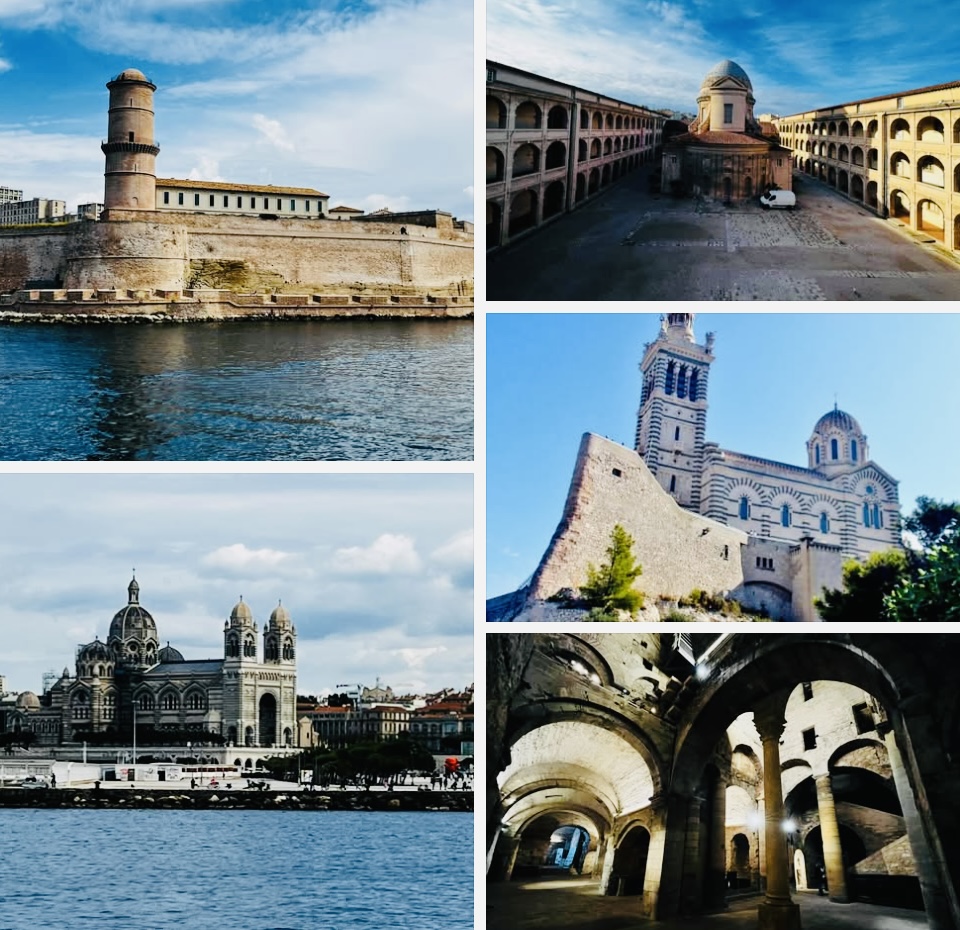
The first stop is the Notre Dame de La Garde hill, to be tackled with a 30/40 minute climb. It’s worth it. In addition to visiting a symbolic place of the city – the origins date back to 1214 – from the spaces of the Basilica the gaze can rotate 360° over Marseille, the coast and the sea. A priceless panorama, dominated by the golden statue of Our Lady, 9.70 meters high.
Then, crossing streets and alleys, you descend with a stop at the extraordinary Abbey of Saint Victor, one of the oldest monuments in Marseille, built on the tombs of the Christian martyrs of the 3rd century. Breathtaking interiors and crypt. Outside, in front of the abbey, here is the “Four des Navettes”, the oldest bakery in the city (1781), just to taste the typical “barchette”. The tour can continue towards the Citadel and the Fort of San Nicola which, with the Fort of San Giovanni – just opposite – closed and controlled the accesses to the Old Port, defending the city.
Also worth seeing, on the south bank (called Rive Neuve), is the Lighthouse Palace, on a rock spur with a panoramic view of the islands of Marseille. For those who can manage, the excursions in the 5th and 6th Arrondissements are interesting. The day ends with a visit to the Soap Museum and the bars / restaurants of Riva Nuova and around the Cours d’Estienne d’Orves. #marseille #france #marseilleturismo #monumentimarseille #panier #nostredamedelagarde #vieillecharite #officedetourismemarseille
*
A piedi. È il modo migliore per visitare Marsiglia. Se si hanno a disposizione almeno 3 giorni pieni è possibile pianificare un tour ragionato della città – che non è affatto piccola: ha quasi 900 mila abitanti ed è la seconda di Francia, dopo Parigi – circoscrivendo il raggio d’azione al centro storico. Benchè Marsiglia sia ben servita dai mezzi pubblici (2 linee di metropolitana, una buona rete tramviaria, un servizio discreto di autobus, una stazione ferroviaria da cui si possono raggiungere le località di Provenza e Linguadoca) la città va scoperta scarpinando. Le giornate potrebbero essere organizzate secondo scansioni geografiche avendo come riferimento il Port Vieux: area sud, area nord, area costiera e isole Frioul e If.
La prima tappa è il colle di Notre Dame de La Garde, da affrontare con una salita di 30/40 minuti. Ne vale la pena. Oltre a visitare un luogo simbolo della città – le origini risalgono al 1214 – dagli spazi della Basilica lo sguardo può ruotare a 360° su Marsiglia, sulla costa e sul mare. Un panorama impagabile, su cui domina la statua dorata di Nostra Signora, alta 9,70 metri. Poi, attraversando vie e vicoli, si scende con sosta alla straordinaria Abbazia di Saint Victor, uno dei più antichi monumenti di Marsiglia, edificata sulle tombe dei martiri cristiani del III secolo. Interni e cripta da togliere il fiato. Fuori, di fronte all’abbazia, ecco il “Four des Navettes”, la più antica forneria della città (1781), giusto per assaggiare le tipiche “barchette”. Il tour può proseguire verso la Cittadella e il Forte di San Nicola che, con il Forte di San Giovanni – proprio dirimpetto – chiudeva e controllava gli accessi al Porto Vecchio, difendendo la città. Da vedere, sempre sulla riva sud (detta Rive Neuve) il Palazzo del Faro, su uno sperone di roccia con vista panoramica sulle isole di Marsiglia. Per chi ce la fa, interessanti le escursioni nel 5° e nel 6° Arrondissement. Giornata da chiudere con la visita al Museo del Sapone e tra i bar / ristoranti della Riva Nuova e attorno al Cours d’Estienne d’Orves. #marsiglia#francia#marsigliaturismo#monumentimarsiglia#panier#nostredamedelagarde#vieillecharite#officedetourismemarseille

 ROBERTO ALBORGHETTI