
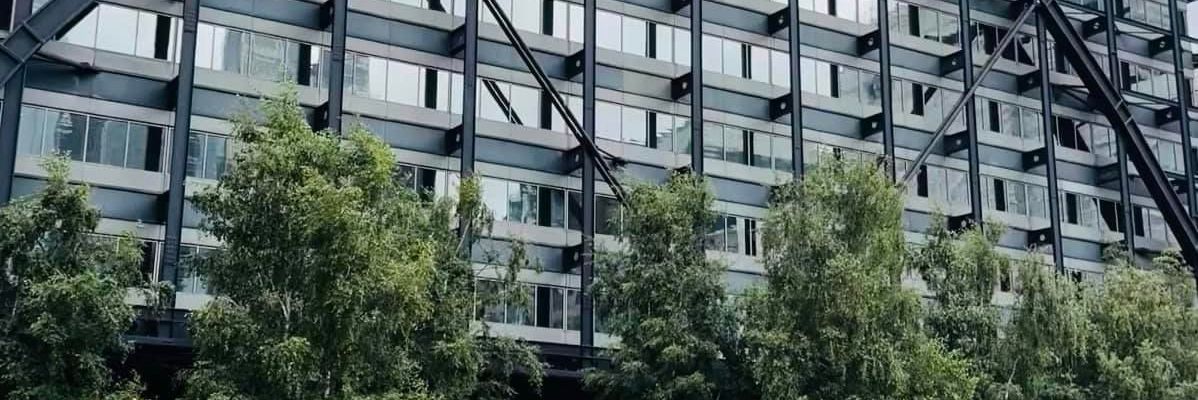
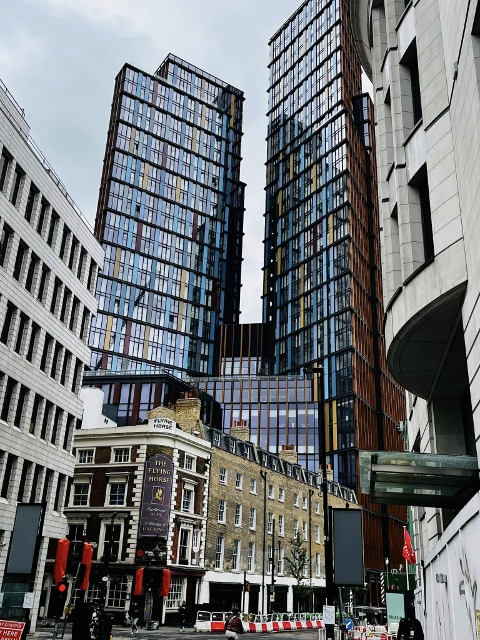

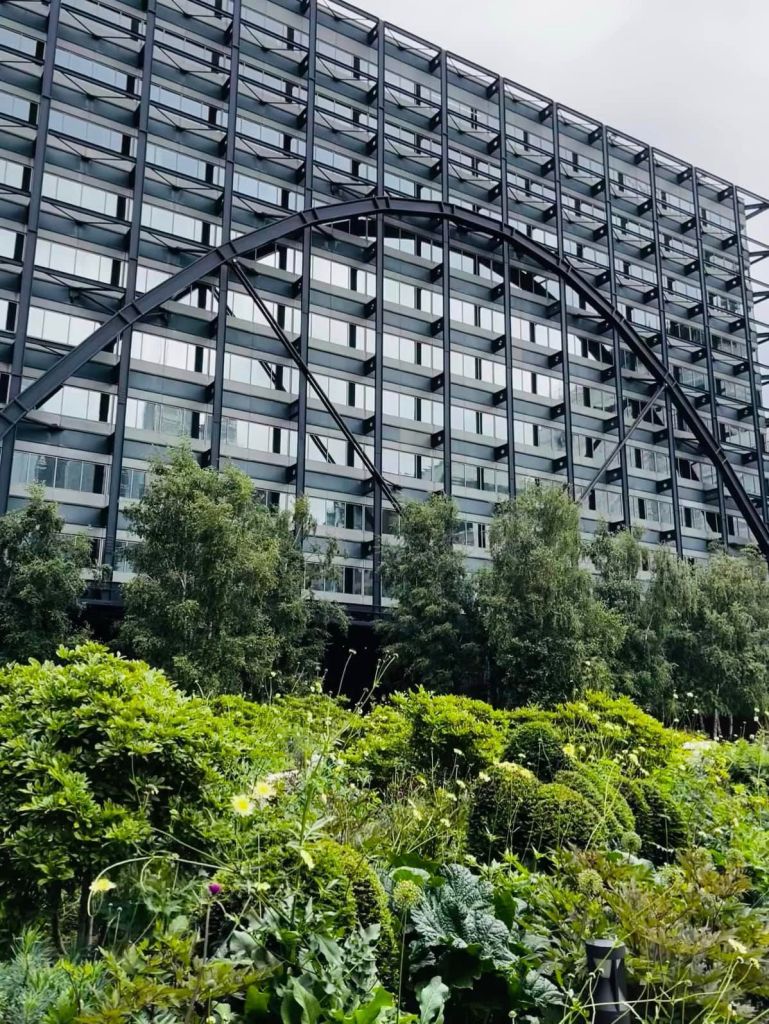
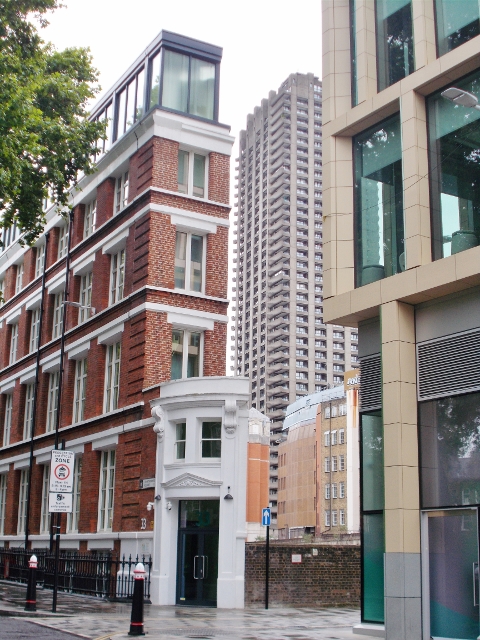


From Nottingham we go down to London. The capital of the United Kingdom is all a construction site. It’s nothing new. Here the ability to transform the urban forms of the past into those of the future travels at a high pace. And if architecture tells us a lot about a city, here it is even like a book that you leaf through from page to page, or rather, from neighborhood to neighborhood. There are areas that are unrecognizable compared to a few years (or months) ago. For example, in the Barbican, around Liverpool Street Station, new buildings – extensive use of glass and transparent materials – have incorporated or replaced dilapidated buildings. If there was anything interesting on a historical and landscape level it has been preserved, as if to perpetuate a dialogue between ancient London and the one projected forward.
The City is a symbolic example of a regeneration of the urban fabric. Where once there were dark suburbs – in every sense – the recovery of light has given lifeblood and vitality to one of the most interesting parts of the cosmopolitan metropolis.
Other examples of large open construction sites are those along the Euston Road axis. An entire area is about to be redesigned and aligned with the aesthetics of other nearby neighborhoods such as Bloomsbury, Marylebone, Mayfair and Soho itself, unrecognizable compared to a few decades ago.
On Euston we saw an interesting thing: a mural (see next post) that captures the polluting elements circulating in an area with high traffic density. Moreover, we are on the congested road that leads to the Saint Pancras and King’s Cross railway hub, where people also queue (very long) for a selfie in front of Platform 9 and 3/4, a place invented by Rowling’s imagination in “Harry Potter.” Yes, just muggle stuff.
london #city #barbican #eustonroad #harrypotter #rowling #london #visitlondon
*
Da Nottingham si scende a Londra. La capitale del Regno Unito è tutto un cantiere. Non è una novità. Qui la capacità di trasformare le forme urbanistiche del passato in quelle del futuro, viaggia ad un ritmo elevato. E se l’architettura ci dice molto di una città, qui addirittura è come un libro che si sfoglia di pagina in pagina, anzi, di quartiere in quartiere. Vi sono zone irriconoscibili rispetto a pochi anni (o mesi) fa. Ad esempio, a Barbican, attorno a Liverpool Street Station, i nuovi palazzi – grande uso di vetri e materiali trasparenti – hanno inglobato o soppiantato edifici fatiscenti. Se c’era qualcosa di interessante sul piano storico e paesaggistico è stato conservato, come a perpetuare comunque un dialogo tra la Londra antica e quella proiettata in avanti.
La City è un esempio simbolico di una rigenerazione del tessuto urbano. Dove un tempo c’erano i sobborghi oscuri – in tutti sensi – il recupero della luce ha dato linfa e vitalità ad una delle parti più interessanti della metropoli cosmopolita.
Altri esempi di grandi cantieri aperti sono quelli lungo l’asse della Euston Road. Un’intera area sta per essere ridisegnata e allineata all’estetica di altri quartieri vicini come Bloomsbury, Marylebone, Mayfair e la stessa Soho, irriconoscibile rispetto a qualche decennio fa. Sulla Euston abbiamo visto una cosa interessante: un murale (vedere il prossimo post) che cattura gli elementi inquinanti che circolano in un’area ad alta densità di traffico. Del resto, siamo sulla congestionata via che porta allo snodo ferroviario di Saint Pancras e King’s Cross, dove la gente fa pure la fila (lunghissima) per un selfie davanti al Binario 9 e 3/4, luogo inventato dalla fantasia della Rowling in “Harry Potter”. Sì, proprio roba da babbani.
#londra#city#barbican#eustonroad#harrypotter#rowling#london#visitlondon
 ROBERTO ALBORGHETTI