

© Roberto Alborghetti
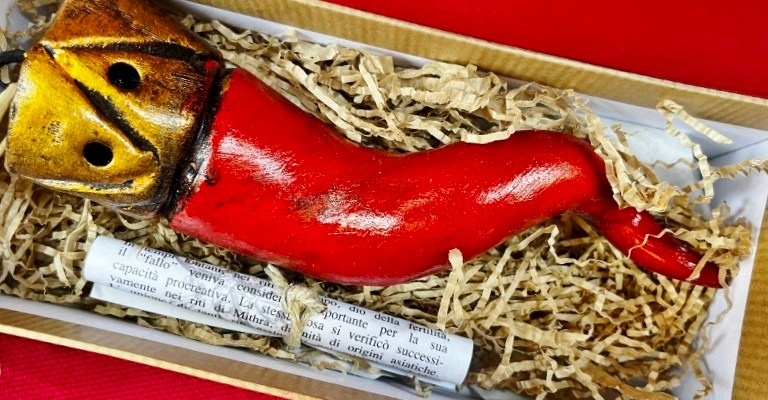
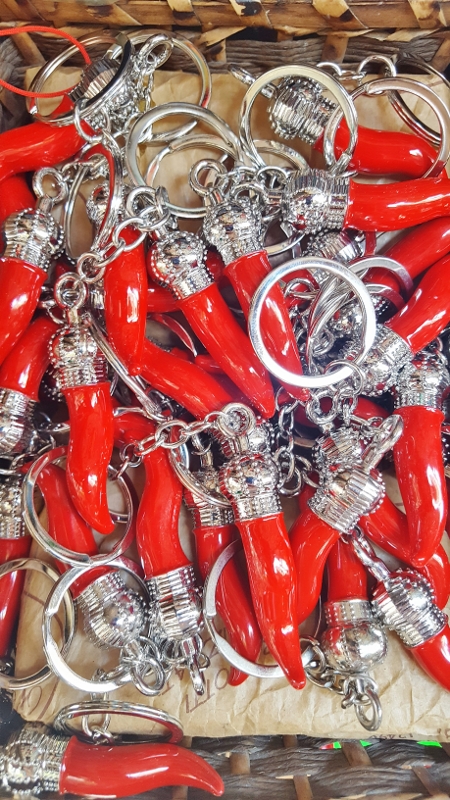
It is the so-called good luck charm par excellence. And for Naples it is one of the distinctive signs of the city. It is the red horn (corno or cornetto) : the “curniciello”, as they say under the Vesuvius. Born in the mists of time from myths and legends, the little red horn is traditionally recognized as an emblem of prosperity, good luck, fertility (for humans and for the earth). It seems that its “fame” dates back to the Neolithic, when animal horns were considered a symbol of physical strength and carriers of positive energy.
Naples, since the Middle Ages, has been the city where artisans started large-scale production of the little red horn spreading it through trade with the rest of Europe. The favorite material is coral, a natural element which, associated with red, the color of blood and fire, is a symbol of life and power. The “curniciello” should not be bought for ourselves but only for others. In the city, especially in the popular neighborhood named Spaccanapoli, there are artisan shops that defend the quality and image of the lucky red horn, which must necessarily be “made in Naples”, possibly handmade.
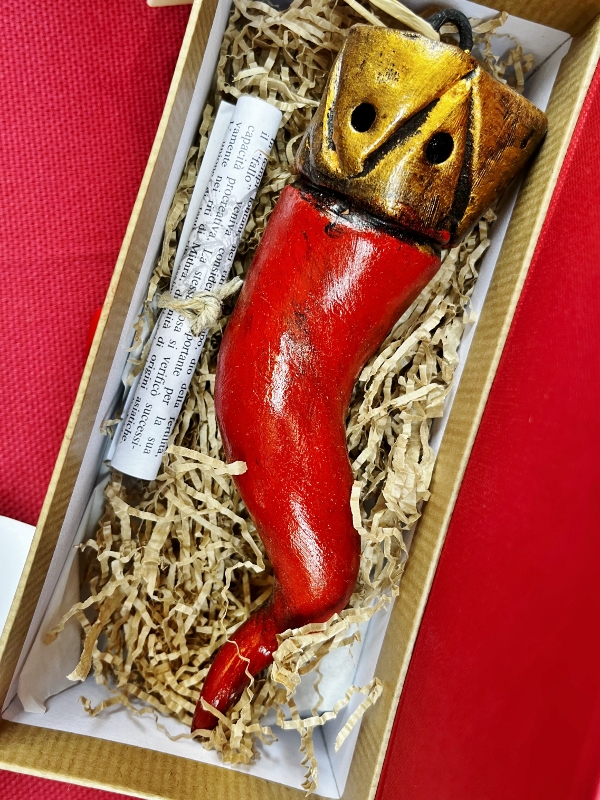
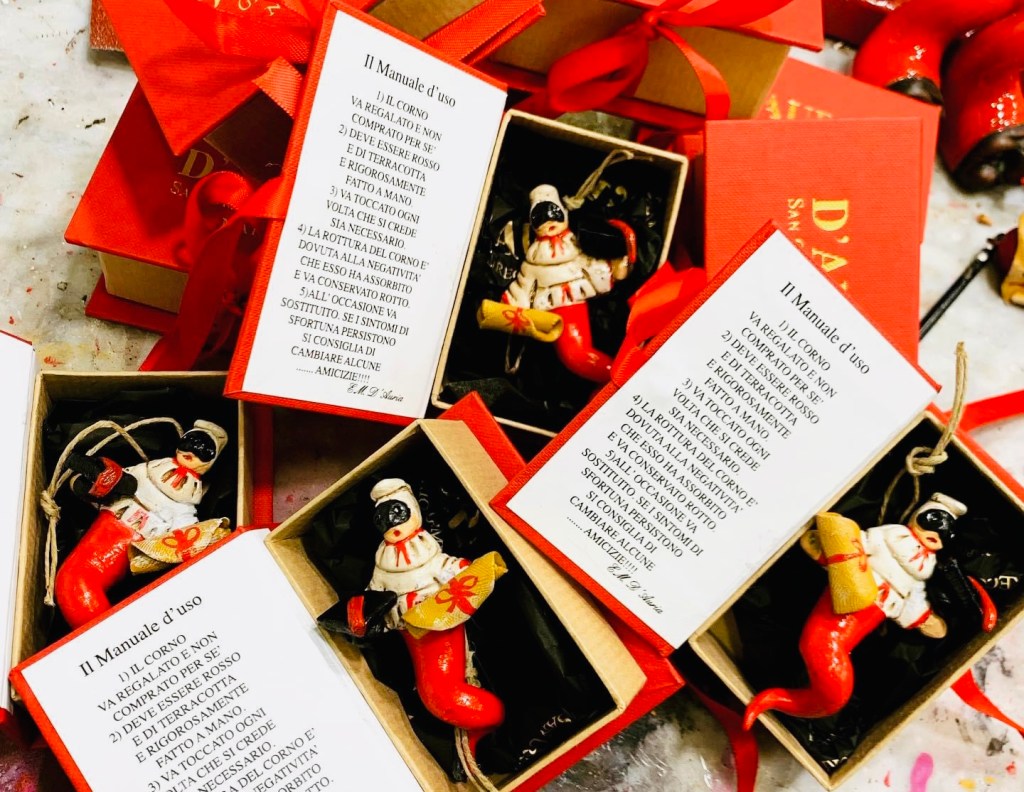
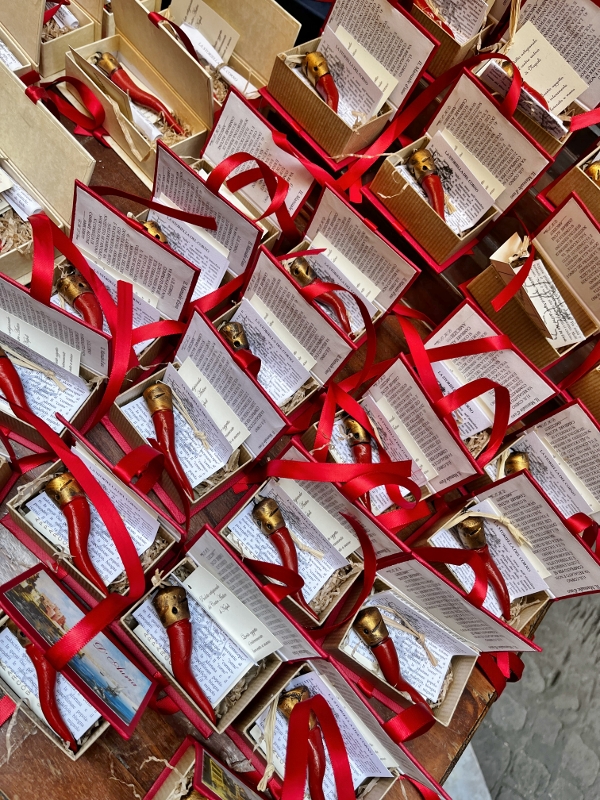
For example, in via San Biagio dei Librai – a few steps from San Gregorio Armeno street – the D’Auria family proudly produces horns of high quality, with guaranteed and special materials that respect the canons of tradition. But not only that: it is one of the shops that best expresses the Neapolitan art of the nativity scene. It is easy to see the D’Aurias at work, beyond the sales counter and in the workshops located nearby. A passion handed down over time and which shines in a vast range of traditional Neapolitan objects, from the “scarabattoli” (beautiful nativity scenes in glass and wooden cases) right up to the red horns, handmade and presented in various shapes. Because the “curniciello”, in Naples, is a playfully serious matter, however one thinks about lucky charms. As the great actor Peppino De Filippo said, “it’s not true, but I believe it”. A phrase that is worth a treatise on human philosophy, as well as being the brilliant title of one of his extraordinary theatrical works (and if you want to participate in the game, rub the little red horn in the photo too).
naples #cornorosso #cornettorosso #curniciello #peppinodefilippo #spaccanapoli #DAuria #sangregorioarmeno
*
È il cosiddetto portafortuna per eccellenza. E per Napoli è uno dei segni distintivi della città. È il corno o cornetto rosso: il “curniciello”, come si dice sotto il Vesuvio. Nato nella notte dei tempi da miti e leggende, è per tradizione riconosciuto come emblema di prosperità, buona sorte, fertilità (per gli esseri umani e per la terra). Pare che la sua “fama” risalga al Neolitico, quando le corna degli animali erano considerate simbolo di forza fisica e portatrici di energia positiva. Napoli, fin dal Medioevo, è la città in cui gli artigiani avviano una produzione su larga scala del cornetto rosso, diffondendolo attraverso i commerci con il resto dell’Europa. Il materiale preferito è il corallo, elemento naturale che, associato al rosso, colore del sangue e del fuoco, è simbolo di vita e potenza.
Per portare bene, il “curniciello” non va comprato per sé, ma per gli altri. In città, soprattutto a Spaccanapoli, sono in attività botteghe artigianali che difendono qualità ed immagine del corno rosso portafortuna, che deve necessariamente essere “made in Napoli”, possibilmente fatto a mano. Ad esempio, in via San Biagio dei Librai – a pochi passi da San Gregorio Armeno – la famiglia D’Auria orgogliosamente produce corni di elevata fattura, con materiali garantiti e speciali che rispettano i canoni della tradizione. Ma non solo: è una tra le botteghe che esprime al meglio l’arte napoletana del presepe. È facile vedere i D’Auria al lavoro, al di là del banco di vendita e nei laboratori situati nelle vicinanze. Una passione tramandata nel tempo e che riluce in una vasta gamma di oggettistica tradizionale partenopea, dagli “scarabattoli” (bellissimi presepi in teche di vetro e legno) fino, appunto, ai cornetti rossi, fatti a mano e presentati in varie fogge.
Perché il “curniciello”, a Napoli, è una questione giocosamente seria, comunque la si pensi in fatto di amuleti portafortuna. Come diceva il grande Peppino De Filippo, “non è vero, ma ci credo”. Una frase che vale un trattato di filosofia umana, oltre che essere il fulminante titolo di una delle sue straordinarie opere teatrali (e se volete partecipare al gioco, strofinate il cornetto pure in foto).
#napoli#cornorosso#cornettorosso#curniciello#peppinodefilippo#spaccanapoli#DAuria#sangregorioarmeno
 ROBERTO ALBORGHETTI
♥️